
Yarmouth Dogs Results: Complete Track Guide, Trap Data and Race Analysis
 Available in US
I have been analysing greyhound form at Yarmouth for over a decade, and one thing has not changed: this track rewards the punter who does the homework. Yarmouth Stadium sits in Caister-on-Sea on the Norfolk coast, postcode NR30 5TE, just north of Great Yarmouth itself. It is one of 18 licensed greyhound stadiums still operating under the Greyhound Board of Great Britain, and it runs a busy weekly card — racing every Monday, Wednesday and Sunday morning, with periodic Saturday evening meetings thrown in for good measure.
What has changed is the sheer volume of data now available around every race. Trap bias patterns, sectional splits, trainer strike rates, grading movements — if you know where to look and how to read the numbers, Yarmouth offers more edges than most punters realise. The problem is that almost every results page online gives you a bare table of finishing positions and times without any of the context that actually matters. No explanation of the grading system, no going data, no trap analysis, nothing about why an 85-metre run to the first bend shapes this track differently from, say, Romford or Crayford.
This guide is my attempt to fill that gap. I have pulled together everything I use when studying Yarmouth cards — track geometry, distances, race scheduling, grading mechanics, trap draw advantages, and the broader industry picture that shapes what happens here in Norfolk. Whether you are a regular at the stadium or placing your first bet online, the aim is the same: give you the analytical framework to read Yarmouth dogs results with real understanding, not just check who finished first.
The Numbers and Angles That Shape Every Yarmouth Card
- Yarmouth runs four distances (277m, 462m, 659m, 843m) on a 382-metre circuit with an 85-metre run-up and an Outside Swaffham hare — each factor directly influences trap bias and race outcomes.
- Trap 1 wins 18-19% of races nationally against an expected 16.6%, but Yarmouth's outside hare gives wider traps a genuine edge at longer distances.
- Three BAGS meetings per week (Monday, Wednesday, Sunday) produce high-volume, consistently graded data — ideal for systematic form analysis.
- Favourites win roughly 35.67% of graded races across UK tracks, with significant track-to-track variation that rewards punters who study venue-specific patterns.
- A five-year ARC media contract secured in January 2025 guarantees Yarmouth's racing calendar through to at least 2030, even as the Welsh and Scottish bans reshape the broader industry.
Yarmouth Stadium: Location, Layout and Track Dimensions
The first time I drove to Yarmouth Stadium, I nearly missed the turn. You come off the A149 into Caister-on-Sea, expecting something grand after reading about the 5,800-plus capacity and the thousand-space car park, and then the entrance appears on your left without much ceremony. The stadium has been here since 1928, making it one of the older operating tracks in English greyhound racing, and while a 190,000-pound refurbishment in 2012 tidied things up significantly, it still carries that unvarnished, working-track atmosphere I prefer over the corporate feel of some London venues.
Track circumference
382 metres
Run-up to first bend
85 metres
Racing distances
277m, 462m, 659m, 843m
Hare type
Outside Swaffham
Capacity
5,800+ spectators
Parking
~1,000 vehicles
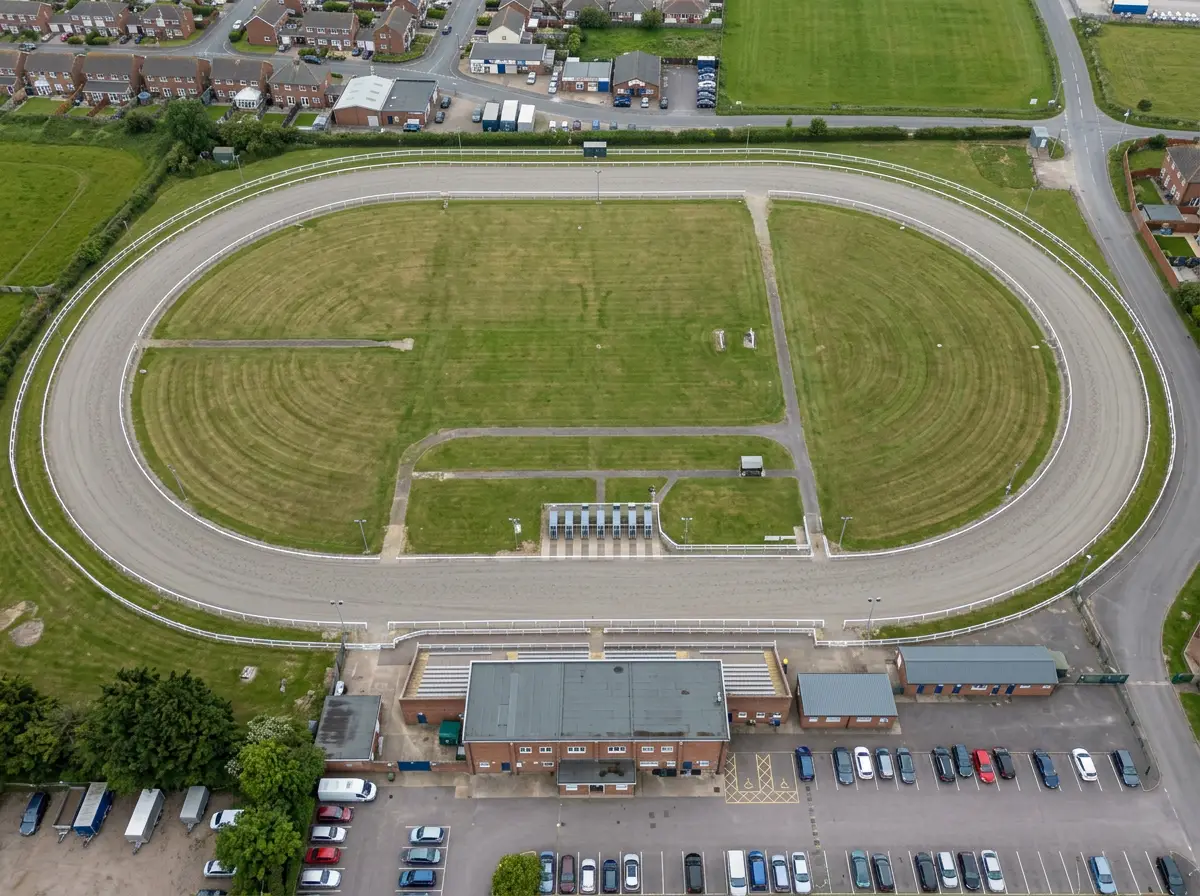
Understanding the physical layout matters more than most punters think. Yarmouth uses an Outside Swaffham hare — meaning the lure runs on the outside rail, pulling dogs naturally toward the wider line through turns. This is a critical detail when assessing trap bias, because it gives dogs drawn in wider traps (4, 5, 6) a cleaner sightline to the hare compared with tracks running an inside rail lure. The 85-metre run from the traps to the first bend is moderately generous by UK standards. It gives slower-starting dogs a few extra strides to find their feet, but it is not long enough to completely neutralise a railer with sharp early pace from trap 1 or 2.
The track circumference of 382 metres means that a standard 462m race covers roughly one full lap plus 80 metres — dogs cross the finish line shortly after passing the boxes for the second time. This is useful to know when watching replays, because the final 80 metres after the last bend often decide tight finishes, and a dog with a strong run-in can overhaul leaders who have drifted wide.
The surface is sand-based, as with most UK greyhound tracks, and Yarmouth's coastal location introduces a variable that inland stadiums do not face: wind. The North Sea is barely a mile east of the stadium, and on exposed winter nights the headwind down the back straight can add a second or more to finishing times. I have seen punters dismiss a dog's performance at Yarmouth because the raw time looked slow, without realising the card was run into a stiff easterly. If you want a deeper look at how to factor weather into your analysis, I cover that separately in the Yarmouth dog track guide, but the short version is: always compare times against the same meeting's standard, not against a different night's card.
Facilities include the Raceview restaurant seating 240 diners, trackside bars, and terracing that gives a clear view across the full circuit. For a detailed visitor breakdown — directions, costs, dining — the stadium guide covers everything. What matters here is the geometry of the track itself, because that geometry determines the patterns in every set of Yarmouth dogs results you will ever read.
Race Days, Fixtures and the BAGS Calendar
A mate of mine once placed a bet on what he thought was a Saturday evening card at Yarmouth, only to discover it was a Monday morning BAGS meeting he had pulled up by mistake. Different day, different field strength, different everything. Knowing the fixture pattern is not just a scheduling convenience — it shapes the quality and predictability of every result.
Yarmouth runs three core fixtures per week: Monday mornings, Wednesday mornings, and Sunday mornings. These are all BAGS meetings — Bookmakers' Afternoon Greyhound Service — contracted to provide content for betting shops and online platforms. Saturday evening meetings happen periodically and tend to attract a different crowd: more spectators on-course, sometimes stronger race entries, and a social atmosphere that the morning sessions lack.
In January 2025, Yarmouth agreed a five-year extension to its media rights deal with ARC (Arena Racing Company). That contract locks in the Monday and evening fixture slots and guarantees broadcast coverage, meaning the stadium's racing calendar has a degree of financial stability that not every track can claim heading into the late 2020s.
BAGS fixtures across the UK generate more than 25,000 races annually, spread across roughly 74 meetings per week nationwide. Yarmouth's three-morning pattern makes it one of the more active contributors to that total. For punters, the practical implication is straightforward: BAGS cards tend to feature graded races with predictable grade bands, while open-race events and category competitions fall outside the BAGS schedule. If you are studying Yarmouth results and notice that Monday and Wednesday cards feel formulaic compared with occasional Saturday specials, that is the BAGS structure at work.
BAGS morning meetings
Scheduled every Monday, Wednesday, Sunday. Graded races (A1-A10 typically). Broadcast to bookmakers. Smaller on-course crowds. Focused on providing consistent betting content.
Saturday evening meetings
Periodic, not every week. May include open races and feature events. Larger on-course attendance. Restaurant and social packages available. Can attract entries from further afield.
One thing I always check before studying a Yarmouth card is the meeting type. The grading mix, the competitiveness of the fields, and even the going can vary depending on whether you are looking at a midweek BAGS card or a Saturday special. Fixture changes do happen — bank holidays and seasonal adjustments can shift meeting days — so confirming the schedule before committing to any serious form study is a habit worth building.
Distances at Yarmouth: From 277m Sprints to 843m Marathons
Every track has a personality, and at Yarmouth it is defined by four distances: 277, 462, 659, and 843 metres. That range — from a pure sprint to a genuine marathon — is broader than some UK tracks offer, and each trip demands a completely different type of dog. I have watched punters apply the same selection criteria across all four distances and wonder why their strike rate collapsed. The reason is simple: what wins a 277m dash has almost nothing in common with what wins over 843 metres.
277m Sprint
A two-bend dash that is over in roughly 16 seconds. Pure early pace and trap position dominate. There is almost no time to recover from a slow break or a first-bend bump. Think of it as the 100-metre sprint of greyhound racing — the start is everything.
462m Standard
The bread-and-butter distance at Yarmouth and across UK greyhound racing. One full lap plus 80 metres, covering four bends. This is where grading matters most, because the majority of A-grade races are run over this trip. It rewards a blend of early pace and mid-race sustain.
659m Stayers
A genuine staying trip that adds two extra bends to the standard distance. Stamina becomes a real factor. Dogs that lead early over 462m sometimes tire and get caught late over 659m. Form reading here needs to account for mid-race positions, not just finishing time.
843m Marathon
The longest distance on the card, covering over two full laps. Marathon races are uncommon — you will not see one on every card — and they attract specialist stayers. Pace judgement and the ability to settle in mid-race are worth more than raw speed at this trip.
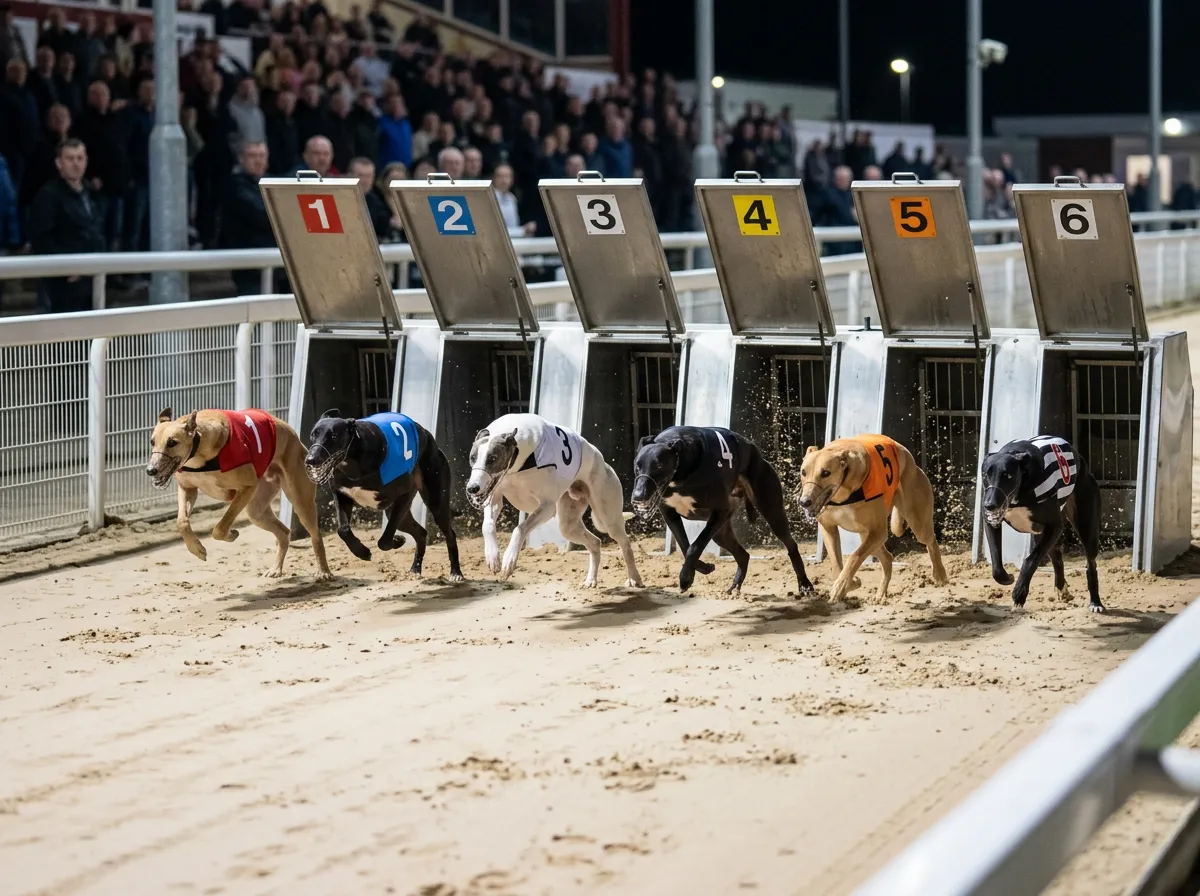
The 462m distance dominates the Yarmouth schedule, which makes sense: it is the standard grading distance and the one BAGS fixtures are built around. But do not overlook the others. The 277m sprint, in particular, has a habit of producing big-priced winners when a drawn-wide dog with sharp pace steals the rail on the inside from a slow-starting favourite. I have seen it happen enough times to pay close attention to the sprint cards.
The 462m standard distance is used for grading at every licensed UK track, but no two 462m races are identical. Differences in circuit length, run-up distance, bend geometry, and hare type mean that a 28.50-second 462m at Yarmouth is not the same effort as a 28.50-second 462m at, say, Hove or Nottingham. Raw times across tracks are not directly comparable without adjustment.
When comparing finishing times across distances, remember that Yarmouth's 382-metre circumference and 85-metre run-up create specific bend geometries for each trip. A 277m race involves just two bends and a short straight; an 843m marathon sends dogs through eight or more bends. The more bends involved, the more that track positioning and racing luck come into play, and the less reliable raw speed figures become as a predictor. For distance-specific analysis with trap bias data broken down by trip, the Yarmouth trap stats page goes into full detail.
How the Grading System Works at Yarmouth
Years ago, I backed a dog dropping from A3 to A5 at Yarmouth, expecting it to demolish a weaker field. It finished fourth. That taught me something important: grade changes are not free money, and understanding why a dog moves between grades matters far more than noticing that it moved at all.
The grading system in British greyhound racing assigns each dog a band — typically A1 at the top through to A10 or lower — based on its recent race times at the relevant track. The key word there is "track": a dog graded A4 at Yarmouth earned that grade by running specific times at Yarmouth, not at some other stadium. Grades are not transferable. When a dog arrives from another track or from Ireland, it is trialled and assigned a fresh grade based on its time at Yarmouth over the standard 462m distance.
Grading (A-grade system) — a classification system that groups greyhounds by ability based on their recent finishing times at a specific track. Lower numbers indicate higher ability: an A1 dog is faster than an A6 dog. Grading ensures competitive fields by matching dogs of similar speed.
At a national level, favourites win roughly 35.67% of graded races, but that average hides significant track-by-track variation — the range runs from about 31.60% at one extreme to over 42% at another. Yarmouth sits somewhere in that spread, and the exact favourite strike rate fluctuates season to season. What stays consistent is the grading mechanic itself: win too often or record faster times, and the racing manager promotes you to a higher (harder) grade; run poorly, and you drop. The system is designed to keep races competitive and, by extension, to keep betting markets interesting.
Example: how a grade change works
A dog runs three consecutive 462m races at Yarmouth and posts times of 28.90, 28.75, and 28.82 seconds. These times are faster than the A5 grade band requires, so the racing manager promotes the dog to A4 for its next outing.
In the A4 race, the dog now faces opponents who have recorded similar or faster times. The competition is stiffer. The dog finishes third in 28.95 seconds — a slightly slower run that would have won at A5 but is only mid-pack at A4.
This is why backing newly promoted dogs blindly is a losing strategy. The promotion itself signals improved form, but it also signals harder races ahead.
Grading also interacts with trap draws and distance preferences in ways that casual punters miss. A dog may be graded A4 based on strong 462m times, but if it is entered in a 277m sprint, that grade tells you very little about its sprint ability. The grading system is distance-agnostic at most tracks — it uses the standard distance for classification — so sprint and staying races can produce mismatches that the grade bands do not capture. For a deeper breakdown of how grade changes create specific betting angles, I cover the Yarmouth greyhound grading system in a dedicated piece.
Racing manager — the official at each licensed track responsible for compiling race cards, assigning trap draws, and managing the grading of greyhounds. The racing manager's decisions directly shape the competitiveness of every race.
Trap Bias at Yarmouth: Which Box Wins Most?
If I had to pick one piece of data that separates informed punters from casual ones at Yarmouth, it would be trap bias. Most people know that there are six traps — red, blue, white, black, orange, black-and-white striped — and they know that the inside box is trap 1 and the outside is trap 6. What most people do not know is how unevenly those traps perform across different distances, and how Yarmouth's specific track geometry tilts the playing field.
Trap-Draw Analyser
No single trap "always wins" at Yarmouth — the Outside Swaffham hare and the bend count tilt the draw differently at every distance. Pick a trip, a trap and the dog's early pace to see where the draw helps or hurts.
Check the distance, not the track average. A trap-1 edge that's decisive over the 277m sprint nearly disappears over 843m, where the outside hare and extra bends hand wider runners a cleaner line. The single overall trap figure hides this — always read bias for the specific trip.
Only bet what you can afford to lose. Affected by gambling? GambleAware or the National Gambling Helpline 0808 8020 133 (24/7, free, confidential).
Nationally, trap 1 wins approximately 18-19% of races against a theoretical expected rate of 16.6% (one in six, if all traps were equal). That two-to-three percentage point edge does not sound dramatic, but across hundreds of races per year it represents a significant statistical lean toward the inside rail. At Yarmouth, the Outside Swaffham hare complicates this picture. Because the lure runs on the outside, dogs drawn wide have a more direct sightline and tend to maintain cleaner runs through the bends without getting baulked by rivals cutting across their path.
No single trap "always wins" at Yarmouth. Trap bias shifts meaningfully between the 277m sprint — where inside draws dominate because there are only two bends and the rail advantage is enormous — and the 659m or 843m trips, where wider traps benefit from fewer crowding incidents across multiple bends. Always check bias data for the specific distance, not just the overall track figures.
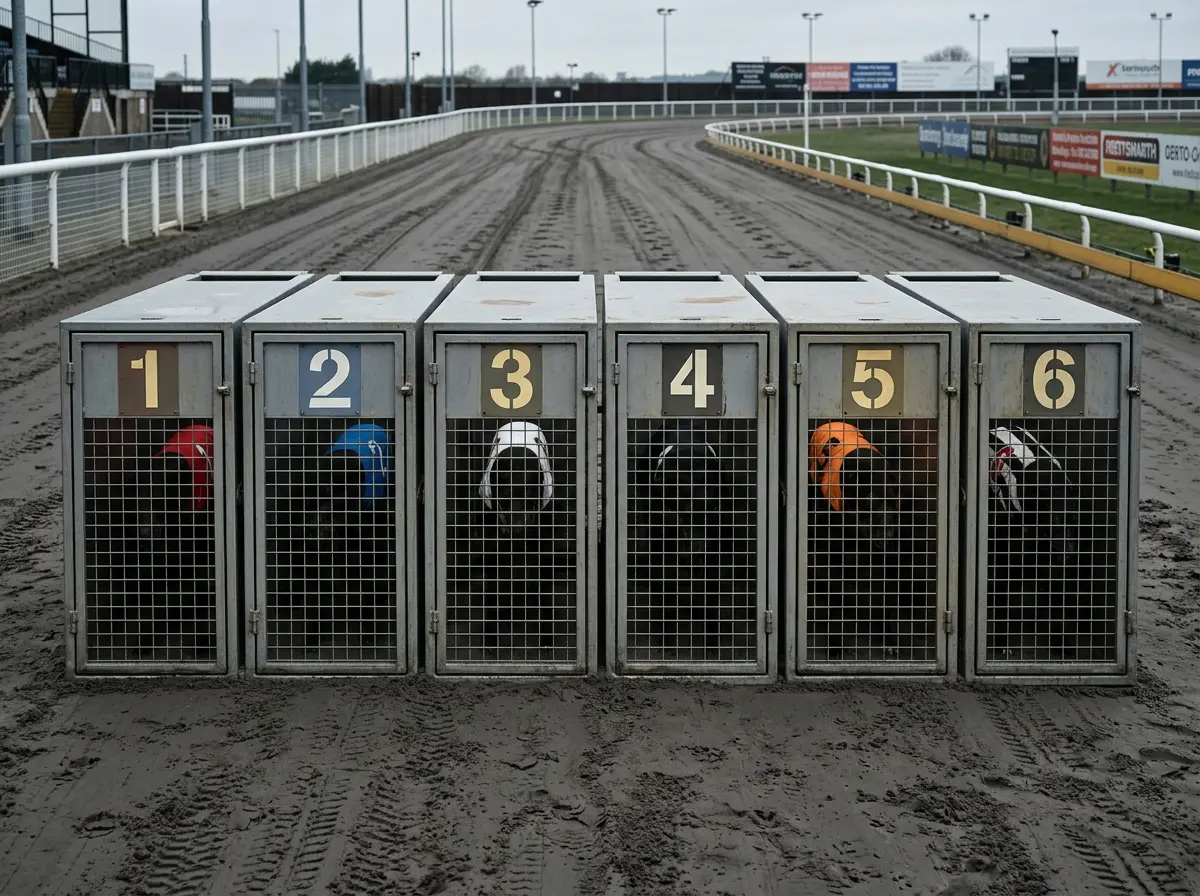
The 85-metre run to the first bend at Yarmouth is the critical corridor. Over that stretch, six dogs travelling at up to 40mph converge from a staggered starting line into a single racing line through the bend. Dogs in traps 1 and 2 have less ground to cover to reach the rail. Dogs in traps 5 and 6 need to either show enough early pace to cross to the inside before the bend, or hold their wider line and rely on the outside hare to keep them focused. Which strategy works better depends on the individual dog's running style, but the trap draw loads the dice before the race even starts.
| Trap | Jacket colour | National avg. win rate | Edge vs. expected 16.6% |
|---|---|---|---|
| 1 | Red | ~18-19% | Positive |
| 2 | Blue | ~17-18% | Slight positive |
| 3 | White | ~16-17% | Near expected |
| 4 | Black | ~15-16% | Slight negative |
| 5 | Orange | ~15-16% | Slight negative |
| 6 | Black/white stripes | ~15-16% | Slight negative |
These are national averages, and Yarmouth's own figures vary by distance and season. The main takeaway here is simple: trap position is not noise — it is a genuine variable in every Yarmouth result, and ignoring it means you are starting your analysis with incomplete information.
How to Read Yarmouth Dogs Results
I remember sitting in a bookmaker's as a teenager, staring at a greyhound result slip that might as well have been written in Mandarin. A column of numbers, abbreviations, and codes that clearly meant something to the regulars but nothing to me. If you have ever felt that way looking at a Yarmouth result card, this section is for you.
A standard Yarmouth result displays several columns of information for each dog in the race. The exact layout varies between data providers, but the core elements are consistent. Here is what you are actually looking at:
Reading a typical Yarmouth 462m result line
Position: 1st. Trap: 3 (white jacket). Dog name: example entry. Finishing time: 28.74 seconds. Distances: by 2 lengths. In-running comment: "mid, led 3" — meaning the dog raced in the middle of the pack, then took the lead at the third bend.
SP (Starting Price): 5/2. Weight: 32.1 kg. Trainer: listed by name. Grade: A4.
Each of these data points tells part of the story. The finishing time tells you raw speed. The in-running comment tells you how the race unfolded. The distances column tells you the margin — whether it was a comfortable win or a desperate head bob on the line.
The abbreviations in the in-running comments are where new punters get lost. "Led 1" means the dog led from the first bend. "Crd 2" means it suffered crowding (interference) at the second bend. "RnIn" means it ran on strongly in the final straight (the run-in). "Bmp 1" indicates a bump at the first bend. These shorthand notes are gold for form analysis, because they tell you whether a poor finishing position was the dog's fault or just bad luck in running.
Sectional time (calculated) — the estimated time a dog takes to cover a specific portion of the race, usually the first section to the first bend and the remaining section to the finish. Official sectionals are not published at all UK tracks, but calculated versions derived from in-running positions and overall times give a useful approximation.
Weight is listed for every runner and compared to its previous race weight. A shift of half a kilogram or more can indicate changes in fitness, conditioning, or health. It is not the most powerful form indicator on its own, but combined with recent times and in-running comments, a sudden weight shift can flag dogs to watch or avoid.
The starting price (SP) recorded in results reflects the on-course market at the time the traps opened. Comparing SP to a dog's finishing position across several races reveals patterns: a dog consistently sent off at short prices but finishing second or third might be a false favourite, while a dog regularly beating its SP suggests the market has been undervaluing it. For a complete walkthrough of every column on the Yarmouth card, including trial times and advance entries, the Yarmouth greyhound racecard guide breaks it all down.
SP (Starting Price) — the final odds offered on a dog at the moment the traps open. SP is the reference price used for settling bets when no specific price was taken. Comparing SP across a dog's recent runs is one way to gauge market confidence over time.
Yarmouth as a BAGS Track: What It Means for Your Bets
Not all greyhound meetings are created equal, and the distinction that matters most at Yarmouth is one that hardly anyone talks about in the results pages: this is a BAGS track. BAGS — Bookmakers' Afternoon Greyhound Service — exists to supply a stream of races for betting shop screens and online platforms. It is, in effect, the commercial engine that keeps tracks like Yarmouth financially viable on a day-to-day basis.
Across the UK, BAGS provides more than 25,000 races annually through approximately 74 meetings per week. Yarmouth contributes three of those weekly meetings, and the format is tightly structured: graded races over standard distances, predictable card sizes, races timed at regular intervals to fit broadcast slots. This regularity is what gives BAGS racing its analytical appeal — you are looking at a consistent framework, week after week, with dogs graded against the same track, over the same distances, under the same conditions.
BAGS graded racing
Dogs grouped by recorded times. Fields are competitive within the grade band. Results follow fairly predictable patterns once you understand grading mechanics. Betting markets tend to be efficient because bookmakers monitor these races closely.
Open / feature racing
Dogs entered by ability regardless of grade. Fields can be uneven if one entry clearly outclasses the rest. Less predictable, but value opportunities arise when market confidence is misplaced. Bigger prize money attracts entries from outside the usual Yarmouth pool.
Sir Philip Davies, Chairman of the GBGB, has noted that funding for the sport has to be sustainable, and BAGS income is a significant part of that equation for the 18 licensed stadiums. The reality for punters is that BAGS meetings at Yarmouth produce a high volume of data in a controlled environment — which is exactly what systematic analysis thrives on. If you are building a form database, tracking trainer patterns, or testing trap bias theories, BAGS meetings give you the sample sizes needed to draw meaningful conclusions.
The 18 licensed stadiums across Britain run a combined total of roughly 900 meetings per year and more than 70,000 individual races. Yarmouth's three BAGS meetings per week place it firmly in the mid-tier by volume, generating enough data for robust analysis without the dilution you sometimes see at tracks running five or six meetings weekly.
One practical implication: BAGS cards at Yarmouth are less likely to spring massive upsets than open-race events, because the grading system ensures broadly matched fields. That does not mean favourites always win — they do not — but it does mean the form book tends to be more reliable on BAGS cards than on open nights. Adjust your staking and your expectations accordingly.
UK Greyhound Racing in 2026: The Centenary Landscape
On 24 July 1926, six greyhounds broke from traps at Belle Vue Stadium in Manchester and ran the first licensed greyhound race in British history. One hundred years later, the sport is still here — smaller, harder-pressed, but still generating over 70,000 races a year across 18 stadiums. If you are going to analyse Yarmouth results seriously, you need to understand the broader landscape those results exist within, because industry-level pressures shape everything from prize money to field quality to the long-term viability of the track itself.
Sir Philip Davies, the GBGB Chairman, marked the centenary by noting that greyhound racing in the UK is celebrating 100 years since racing first took place at Belle Vue in 1926. It is a milestone worth pausing on, because the intervening century has been a story of dramatic rise, long decline, and stubborn survival.
At its peak in 1946, greyhound racing attracted roughly 70 million spectators annually across the UK — more than football at the time. The sport was woven into the fabric of working-class leisure in a way that is difficult to imagine now. Between 1960 and 2010, 91 licensed stadiums closed, reducing the circuit to a fraction of its post-war footprint.
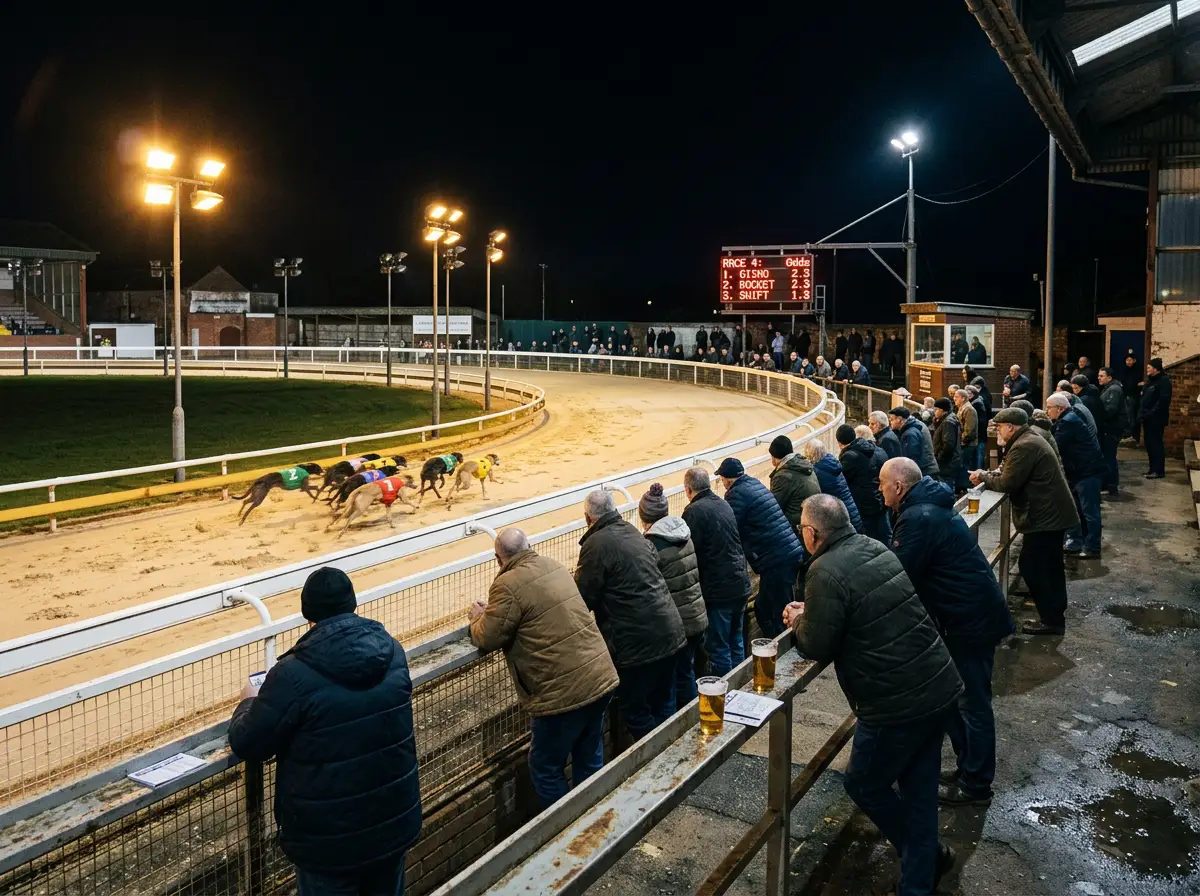
Today, the remaining 18 licensed tracks operate under the Greyhound Board of Great Britain, with a registered sector that includes approximately 500 trainers, 3,000 kennel staff, and 700 track officials. Around 6,000 greyhounds are registered for racing each year, owned by roughly 15,000 individuals. The economics are sustained largely by betting: bookmaker turnover on greyhound racing reached 794 million pounds in the 2023-24 financial year, and the British Greyhound Racing Fund collected 6.75 million pounds from voluntary bookmaker contributions in 2025-26.
The welfare conversation has intensified over the past decade, and the data is genuinely improving. In 2024, the trackside injury rate fell to a record low of 1.07% of total race starts — 3,809 injuries from 355,682 races. A GBGB spokesperson stated plainly that welfare standards are higher than ever in British licensed greyhound racing and provide far greater protections than for pet dogs. Whether or not you agree with that framing, the directional trend in the safety data is hard to dispute.
The Remote Gaming Duty is rising from 21% to 40% from 1 April 2026 — nearly doubling the tax burden on online betting operators. This increase could reduce the revenue flowing back to tracks through media rights and voluntary levies, creating financial pressure across the entire greyhound racing circuit. Yarmouth's recently extended ARC contract provides some insulation, but the broader fiscal environment for the sport is tightening.
For Yarmouth specifically, the centenary year is complicated. The track has a stable media contract, a loyal local following, and a century-long history in Norfolk. But it operates in an industry that has shrunk from over a hundred stadiums to eighteen, in a political climate where two of the UK's devolved nations have just voted to ban the sport entirely. Understanding where Yarmouth sits within this landscape is essential context for anyone trying to interpret its results with any depth.
The East Anglian Derby: Yarmouth's Premier Competition
Every track has a race that defines it, and at Yarmouth that race is the East Anglian Derby. I make a point of attending every year, partly for the racing and partly because the final tells you a lot about the current state of the track — the quality of the entries, the kennel representation, the atmosphere. It is the one night when Yarmouth stops being a BAGS workhorse and becomes a stage.
The East Anglian Derby has been running since 1947 over the 462m standard distance. The winner's prize reached 15,000 pounds in 2021, placing it below the national derbies in pure prize money — the English Greyhound Derby carries 175,000 pounds to the winner — but firmly among the most significant regional competitions in the calendar. The format typically involves qualifying rounds spread over preceding weeks, with the six finalists earning their place through elimination heats. This multi-round structure means the finalists have proven their form at Yarmouth over several runs, which gives the results analyst genuinely useful data to work with.
The East Anglian Derby is one of the longest-running regional greyhound competitions in Britain, spanning nearly eight decades of continuous racing at Yarmouth. The roll of winners reads as a condensed history of the sport in Norfolk and East Anglia.
From an analytical standpoint, derby nights at Yarmouth produce a different kind of data compared with standard BAGS cards. The fields are not assembled by grading — they are self-selecting through elimination — so the usual grade-based assumptions go out the window. Trap draws still matter, but the dogs in a derby final tend to be sharp enough that early pace differences narrow. It is one of the few Yarmouth events where race-reading skill and understanding of individual dogs' running styles outweighs statistical modelling. If you want the full historical picture, including a look at notable past winners and how the competition compares to the national derbies, I have covered it separately in the East Anglian Derby results article.
The East Anglian Derby represents Yarmouth's past and present. But the future of greyhound racing at this track — and across England — is now shaped by events in Cardiff and Edinburgh as much as anything that happens on the sand in Norfolk.
What the Welsh and Scottish Bans Mean for Yarmouth
Two votes in the space of 24 hours changed the trajectory of British greyhound racing. On 17 March 2026, the Senedd in Wales passed the Prohibition of Greyhound Racing (Wales) Bill, with implementation set for sometime between April 2027 and April 2030. The very next day, the Scottish Parliament backed the Greyhound Racing (Offences) (Scotland) Bill by 70 votes to 27, with 19 abstentions. Just like that, two of the UK's four nations moved to outlaw the sport.
For Yarmouth, sitting on the Norfolk coast and firmly within England, neither ban applies directly. But the indirect consequences are real and worth thinking through.
Wales currently has one licensed greyhound track (Valley, in Ystrad Mynach). Scotland has none — the last Scottish track closed years ago, so the Scottish bill primarily criminalises any future attempts to reintroduce the sport. The practical impact falls on Wales, but the political signal is aimed squarely at Westminster and the question of whether England will follow.
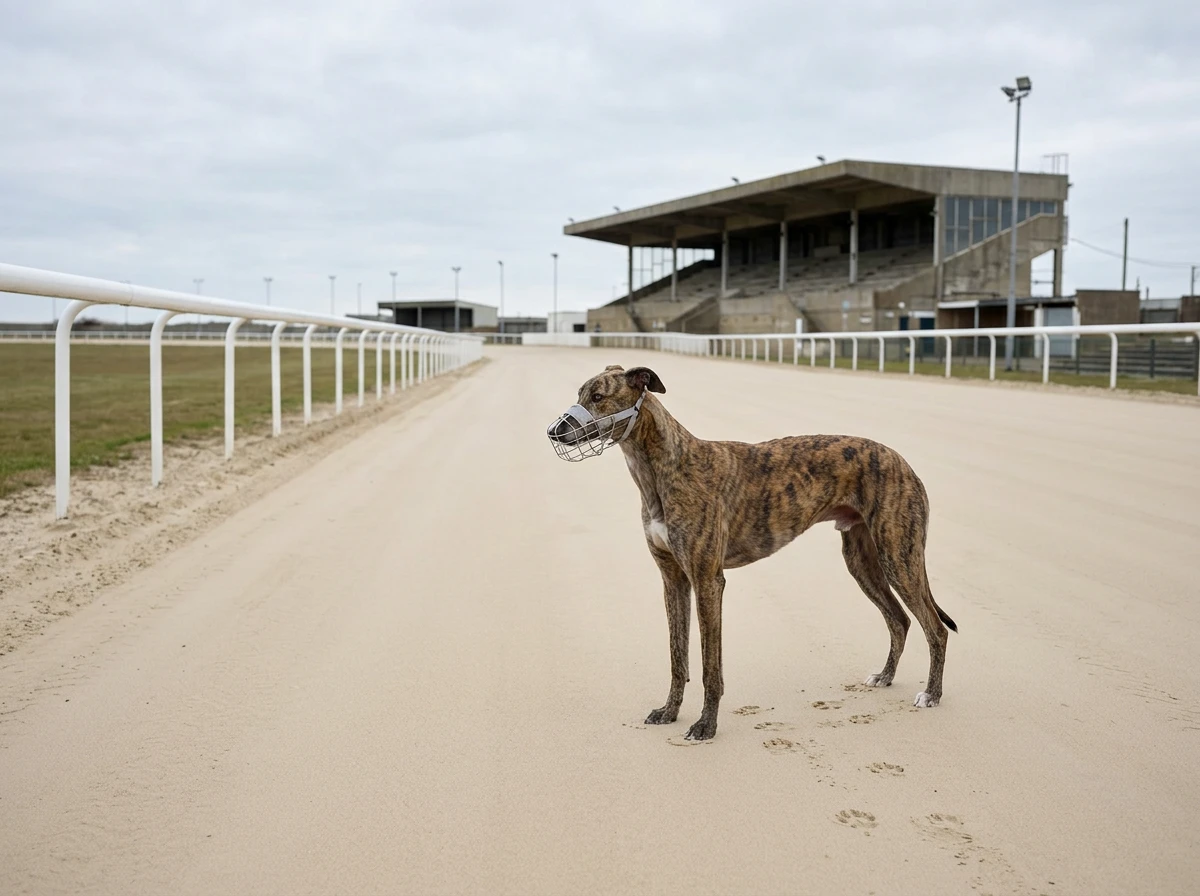
The first practical effect is reputational. Greyhound racing in England now operates as one of the few remaining legal venues for the sport in a country where two devolved parliaments have deemed it unacceptable. Public polling has shown support for bans — 57% in Wales and 60% in Scotland according to Panelbase surveys from 2022-23 — and those numbers put pressure on English politicians to consider similar legislation. Whether that pressure translates into action is an open question, but the direction of travel is clear.
The second effect is structural. If the Welsh track closes, its dogs, trainers, and some of its betting volume will redistribute to English stadiums. Yarmouth is unlikely to absorb much of that directly — the geography does not favour it — but the overall pool of racing dogs and industry personnel shifts. More importantly, any reduction in the total number of licensed tracks concentrates the sport further, making each remaining stadium slightly more important to the industry's survival and, potentially, more attractive for media rights deals.
Yarmouth's five-year ARC contract extension, agreed in January 2025, provides a buffer of financial certainty through to at least 2030. That contract covers broadcast rights, fixture scheduling, and the revenue stream that underpins BAGS racing at the stadium. In a period of legislative uncertainty, that kind of medium-term commitment is valuable. It does not guarantee the long-term future of greyhound racing in England, but it does guarantee that Yarmouth will be producing results — and generating data for analysis — for the foreseeable future.
Frequently Asked Questions
What days do greyhounds race at Yarmouth?
Yarmouth Stadium runs three core fixtures per week: Monday mornings, Wednesday mornings, and Sunday mornings. These are all BAGS meetings — Bookmakers' Afternoon Greyhound Service — designed to provide content for betting shops and online platforms. Saturday evening meetings are held periodically and tend to feature a more social atmosphere with on-course dining and, occasionally, open races or feature events alongside the standard graded card.
What distances are run at Yarmouth greyhound stadium?
Yarmouth offers four racing distances: 277 metres (sprint), 462 metres (standard), 659 metres (stayers), and 843 metres (marathon). The 462m trip is the most common and serves as the benchmark for grading. Each distance demands different attributes from the dogs — pure early pace for the 277m, stamina and positioning for the 843m — so form analysis should always be distance-specific rather than generalised across the entire card.
Where can I find today's Yarmouth greyhound results?
Results are published by several online aggregators and racing data services shortly after each race finishes. The official Yarmouth Stadium website also posts advance cards and PDF results. For the most useful analysis, look for a provider that shows in-running comments, sectional times, and starting prices alongside the finishing order — a bare list of positions and times misses the context you need for serious form study.
How does the grading system work at Yarmouth?
Dogs are assigned a grade band — typically A1 (highest) through A10 (lowest) — based on their recorded times at Yarmouth over the 462m standard distance. Faster times earn higher grades; slower or inconsistent times result in lower grades. The racing manager adjusts grades after each run to keep fields competitive. Grades are track-specific, so a dog's grade at Yarmouth does not automatically carry to another stadium.
What is the East Anglian Derby?
The East Anglian Derby is Yarmouth's premier competition, run annually over the 462m standard distance since 1947. It is a multi-round event with qualifying heats leading to a six-dog final. The winner's purse reached 15,000 pounds in 2021, making it one of the significant regional derbies in British greyhound racing. Derby nights produce form data that is distinct from regular BAGS cards because the fields are assembled through elimination rather than grading.
Is Yarmouth a BAGS or PGR track?
Yarmouth is primarily a BAGS track. Its three weekly morning meetings — Monday, Wednesday, and Sunday — are all contracted through the Bookmakers' Afternoon Greyhound Service, which provides races for the betting industry. Periodic Saturday evening meetings may include open races or feature events that sit outside the BAGS framework. The distinction matters because BAGS cards follow a structured grading format that lends itself to systematic analysis, while open events introduce more variability.
How much does trap position matter at Yarmouth?
Trap position is a statistically significant factor in Yarmouth results. Nationally, trap 1 (inside rail) wins approximately 18-19% of races against an expected random rate of 16.6%. At Yarmouth, the Outside Swaffham hare adds a complication: dogs in wider traps can benefit from a cleaner sightline to the lure, particularly over longer distances with more bends. The degree of trap bias varies by distance — it is strongest in 277m sprints, where inside traps dominate, and more balanced over 659m and 843m trips. Always check distance-specific data rather than relying on overall track averages.
