
Yarmouth Greyhound Going: Track Conditions, Surface and Weather Effects
 Available in US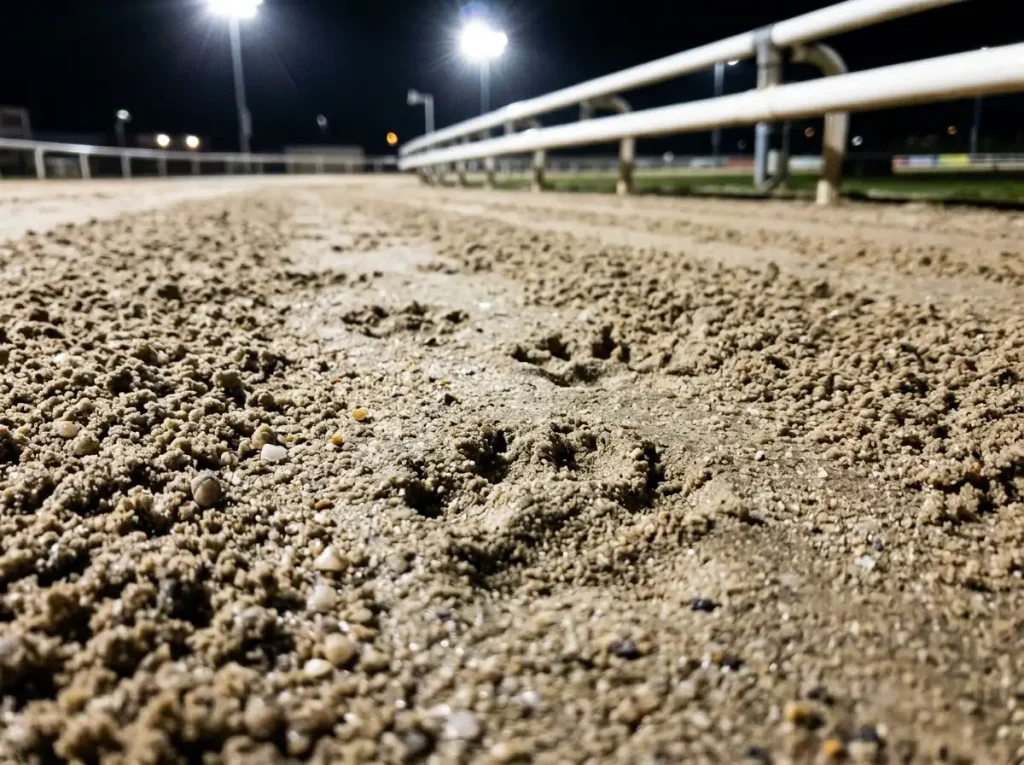
Nobody talks about the going at greyhound tracks the way they do in horse racing, and that silence costs punters money every week. In horse racing, the going report is front and centre – trainers withdraw horses, pundits adjust their selections, and the entire betting market shifts based on whether the ground is firm, good or soft. In greyhound racing, the surface barely gets a mention, even though it has a measurable impact on times, trap bias and race outcomes. At Yarmouth – a coastal track exposed to the North Sea – the going is one of the most underrated factors in the results.
Yarmouth’s track uses a sand surface, as all licensed UK greyhound stadiums do. The Greyhound Board of Great Britain now conducts quarterly inspections of every venue through STRI – the Sports Turf Research Institute – which has doubled the frequency of expert safety visits compared to a few years ago. But those inspections focus on safety and consistency, not on providing punters with a detailed going report. That gap in published information is an opportunity if you know how to fill it yourself.
See also: yarmouth dogs results for going reports and track conditions.
Yarmouth’s Sand Surface and What It Means
Sand tracks play very differently depending on moisture content, temperature and how recently the surface has been graded. A dry, firm surface produces faster times because the dogs’ pads get better purchase and waste less energy sinking into the running surface. A wet surface – after rain or heavy watering – absorbs more of the dogs’ energy on each stride, slowing times across the board and potentially shifting the trap bias by altering how dogs handle the bends.
The 382-metre circuit at Yarmouth is maintained to GBGB specifications, and the track staff water and grade the surface before each meeting. But conditions can change during a meeting, particularly on warm summer evenings when the surface dries out between the first and twelfth race, or on wet days when rain during the card alters the going mid-meeting. I have seen winning times over 462m drop by as much as 0.30 seconds between the first and last race on a drying track, which is enough to affect the value of every selection on the later card.
Tiffany Blackett, the GBGB’s Executive Veterinarian, has spoken about ongoing improvements to welfare and track safety standards. Those improvements include how surfaces are monitored and maintained, which means the consistency of the going at venues like Yarmouth has improved in recent years. But consistency between meetings is not the same as consistency within a meeting, and the punter who pays attention to intra-card time shifts has an edge over the one who treats every race as identical.
Coastal Wind at Yarmouth and Its Impact on Times
Ask anyone who has stood on the terraces at Yarmouth on a winter Monday and they will tell you the same thing: the wind comes off the sea and cuts straight through you. That wind does not just make the experience uncomfortable – it directly affects how greyhounds run. Yarmouth Stadium sits in Caister-on-Sea, fully exposed to whatever the North Sea is throwing landward, and the prevailing easterly and north-easterly winds create conditions that are distinct from inland tracks.
A headwind on the back straight slows the field, but it does not slow every dog equally. Front-runners bear the full force of the wind, while dogs tucked in behind them benefit from a partial slipstream effect. This can shift the advantage from pure early pace toward dogs that track the leaders and use them as a windbreak, which is a tactical dynamic that barely exists at sheltered inland venues.
Crosswinds are a different problem. A strong crosswind on a bend pushes dogs outward, widening their running line and adding distance to their path. If the crosswind is hitting the first and third bends – the bends that turn away from the wind – it can exaggerate the rail advantage because inside-drawn dogs are shielded by the others. Conversely, if the wind pushes dogs toward the rail, the inside traps can get crowded as the field compresses on the turns.
I do not pretend to know the exact wind conditions at Yarmouth on any given meeting, but I have learned to read the results for wind effects after the fact. When winning times are universally slower than the previous meeting at the same grade level, and trap-one win rates spike above average, I am looking at a headwind card. That reading feeds into my analysis of the next meeting – if the weather forecast shows similar conditions, I adjust my selections accordingly.
How to Read Faster and Slower Going in Results
Here is the method I have used for years, and it requires nothing more than a notebook and five minutes after each Yarmouth meeting. Take the winning times from every race on the card and compare them to the last meeting on the same day of the week at the same venue. If Monday’s A5 race over 462m ran in 29.05 and the previous Monday’s A5 over 462m ran in 29.25, the going was faster this week. If it was slower, the going was slower. Do this for five or six comparable races on the card and you build a picture of the surface conditions without needing an official going report.
The trick is comparing like with like. You need to match the grade, the distance and ideally the position on the card – the first race of the evening usually runs on a freshly graded surface, while the last race runs on a surface that has been chewed up by eleven previous races. Comparing an A3 462m with an A7 462m tells you nothing about the going, because the dogs are running at different speeds for different reasons.
Over time, this method builds a going database that no competitor in the top ten search results offers for Yarmouth. Nobody publishes track condition data in a usable format for greyhound punters – that is a gap I identified years ago and one that pays dividends in selection accuracy. When I know the going has shifted between meetings, I can adjust my expected times, re-evaluate which dogs are suited to the conditions and avoid backing dogs whose recent fast times were a product of quick going rather than genuine improvement. It feeds directly into the broader analytical framework I use for all Yarmouth results and form data.
See also: Yarmouth Trial Times with relevant background information.
