
Yarmouth Greyhound Trainers: Who Runs the Track and Why It Matters
 Available in US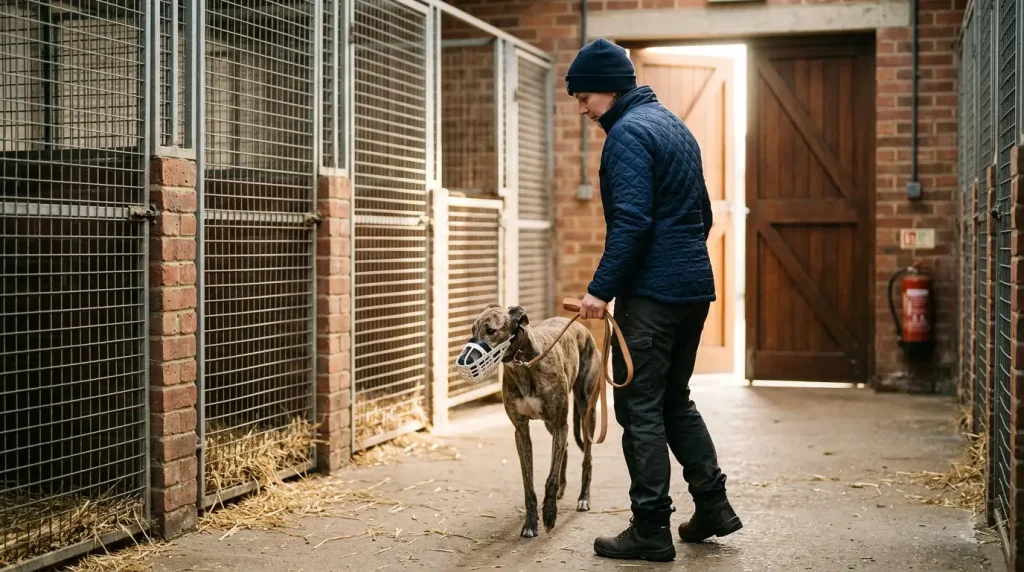
I once backed a dog at Yarmouth purely because its form looked outstanding — four wins in five starts, dropping in grade, fast times. It finished last. When I looked into what went wrong, the answer wasn’t in the form figures or the trap draw. It was in the trainer column. The kennel had just lost two senior staff members, and every dog from that yard had underperformed for three weeks running. The information was there if I’d known where to look. I just hadn’t been looking.
Greyhound racing is often treated as a sport about dogs, and on one level it is. But behind every dog on the Yarmouth card is a trainer who decides when it races, how hard it trials, what distance it runs, and whether it’s ready to perform on any given night. The UK’s regulated sector includes roughly 500 licensed trainers managing around 6,000 active racers, supported by approximately 3,000 kennel staff. At Yarmouth specifically, a smaller core of kennels supplies the majority of runners for the Monday, Wednesday and Sunday BAGS cards, and understanding who these trainers are — and what their patterns reveal — is one of the least-used edges in the sport.
This article maps the trainer landscape at Yarmouth, breaks down what the numbers tell us about kennel performance, and shows you how to fold trainer data into your selections without overcomplicating the process.
See also: yarmouth dogs results for the latest race results and trainer profiles.
The Trainer Landscape at Yarmouth
Yarmouth is not a destination track for the sport’s biggest names in the way that Towcester or Nottingham are for headline open races. It’s a working BAGS venue that races three or four times a week, and its trainer pool reflects that character. Most of the kennels supplying runners are based within an hour’s drive of Caister-on-Sea, concentrated in Norfolk, Suffolk and the eastern edges of Cambridgeshire. A handful of larger operations based further afield occasionally enter dogs for open events or when grading opportunities look favourable, but the core roster is local.
Nationally, there are around 15,000 registered greyhound owners and roughly 500 licensed trainers. At any given Yarmouth meeting, you’ll see dogs from perhaps ten to fifteen different kennels, but four or five of those will account for more than half the entries. This concentration is normal for a BAGS track — trainers based nearby can transport dogs cheaply and frequently, which means their runners appear on the card week in, week out. For the form analyst, this is a gift. A trainer who enters eight dogs per week at Yarmouth generates a data trail you can study far more readily than one who sends a single runner every month.
The economics are straightforward. Yarmouth’s BAGS meetings, run under the ARC media contract renewed in January 2025 for five years, guarantee a certain number of race slots per week. Trainers need to fill those slots with graded dogs of appropriate ability. The closer the kennel is to the track, the lower the transport cost per runner, and the more frequently the trainer can trial and race. Geography shapes the roster, and the roster shapes the patterns you can exploit.
What distinguishes the Yarmouth trainer landscape from larger tracks is the depth of familiarity. The racing manager knows these dogs and trainers intimately. Grading decisions are informed by daily observation, not just raw times. A trainer who consistently presents dogs in peak condition earns a reputation that influences how their runners are graded and which races they’re entered into. This is a closed ecosystem in the best sense — the relationships are tight, the data is dense, and the patterns are stable.
Leading Kennels by Win Rate and Volume
I’m not going to name specific trainers and assign them rankings, because kennel performance shifts over months and any list I publish today will be partially obsolete by the time you read it. What I will do is describe the archetypes — the types of kennels you’ll encounter on a Yarmouth card — and explain what their structural characteristics tell you about their runners.
The volume kennel is the most common type at Yarmouth. This is the operation that enters four, five, sometimes six or more dogs per meeting. Its win rate across all grades and distances might sit around 14 to 17 per cent — unremarkable on the surface. But volume kennels are playing a numbers game. They run a lot of dogs because each one earns prize money and generates betting turnover that keeps the BAGS system funded. The edge with volume kennels lies not in their overall strike rate but in identifying which of their many runners is peaking at the right time. A volume kennel’s dogs rotate through the card frequently, which means you get more data points per dog, and patterns of improvement or decline show up faster.
The specialist kennel is the opposite. This is the trainer who enters two or three dogs per meeting but prepares each one with visible care. The dogs tend to trial well, carry steady weights, and show consistent sectional profiles. The strike rate from these kennels is often higher — I’ve seen specialist yards at Yarmouth hit 20 to 24 per cent over sustained periods — because they only race a dog when they believe it’s ready. The risk with specialist kennels is overconfidence: the market knows these trainers are good, so their runners are often shorter prices, which compresses the value even when the dog wins.
Then there’s the development kennel — the operation that takes on young dogs, often fresh imports from Ireland, grades them, and either keeps them or moves them on to other trainers once they’re established. Development kennels show erratic form lines because their dogs are learning the track, adjusting to the surface, and finding their best distance. A debut runner from a development kennel at Yarmouth is a question mark, but a second or third runner from the same kennel that showed improvement in its trial time is worth watching closely.
Yarmouth races every Monday, Wednesday and Sunday morning, with periodic Saturday evening cards. That rhythm means the core kennels are running dogs on a tight rotation. A trainer who ran three dogs on Monday is unlikely to run those same three on Wednesday — they’ll rotate in different dogs from the same kennel. Tracking which specific dogs are being rested and which are being pushed tells you something about the trainer’s confidence in each animal. A dog that runs Monday and is entered again on Wednesday has a trainer who thinks it’s in condition. A dog that runs Monday and doesn’t appear until the following Sunday might have needed recovery time.
The data I collect on leading kennels includes win rate by distance, win rate by grade band, average winning time relative to grade standard, and the gap between trial times and race times. None of this is available on the racecard itself, but all of it can be built from publicly available results data with a spreadsheet and a bit of patience. Over a sample of fifty or more races per kennel, the signal becomes clear enough to act on.
Trainers and Their Distance Preferences
Not every kennel runs dogs across all four Yarmouth distances, and the ones that do rarely perform equally well at each. Distance specialism is one of the most underappreciated patterns in trainer data, partly because most punters look at a trainer’s overall win rate rather than slicing it by trip.
Sprint specialists — kennels that excel over 277 metres — tend to stock dogs with explosive early pace and high muscle-to-weight ratios. Their runners break fast, lead into the first bend, and either hold on or don’t. The training regime for these dogs focuses on box work (practising clean, fast starts from the traps) and short, intense trial runs rather than long gallops. If you see a kennel whose 277-metre win rate is double its 462-metre rate, you’ve found a sprint specialist, and you should weight its runners accordingly when they appear on a sprint card.
Staying specialists take the opposite approach. Their dogs are bred and conditioned for stamina, with longer stride patterns and the ability to maintain speed through six or eight bends without fading. These kennels often trial over longer distances and tend to produce dogs that look moderate over 462 metres but transform over 659 or 843. When a staying specialist enters a dog at 462 metres, I’m cautious — it’s often a grading run rather than a genuine tilt at the race. When that same kennel enters a dog at 659, I pay close attention.
The middle-distance generalist — the kennel that performs consistently across 462 and 659 metres — is the most common at Yarmouth because those are the distances most frequently carded. These trainers manage their dogs’ fitness across a range of trips and tend to show steady, unspectacular results. Their value to the punter lies in predictability: a dog from a generalist kennel with established form at 462 metres will usually run to within a few lengths of its best time, which makes it a reliable anchor for forecast and tricast bets even if it’s not a standout win prospect.
Trainer Performance Across Grade Bands
Here’s a question I’ve learned to ask about every trainer on the Yarmouth card: at what grade band does this kennel stop winning? The answer is surprisingly consistent within individual operations and it tells you exactly where to apply — and where to withdraw — your attention.
Some kennels dominate the lower grades. Their dogs win regularly in A7 to A10, where the competition is slower and tactical deficiencies are less exposed. But when those dogs get promoted to A5 or A4 after a couple of wins, they hit a ceiling. The trainer’s methods, which produce dogs sharp enough for mid-grade competition, can’t produce the extra half-second of speed needed to compete at the top of the grading ladder. When I see a dog from one of these kennels racing in A4 for the first time after a winning streak in A7, I’m sceptical — the form line says winner, but the trainer profile says ceiling.
Other kennels have the opposite pattern. They rarely win in the lower grades because their dogs are graded there only temporarily — either recovering from injury or adjusting to a new distance. Once these dogs find their level at A3 or A4, the kennel’s win rate jumps. These are often the specialist operations with smaller rosters and more intensive training regimes. Backing their runners in the lower grades is a frustrating experience; backing them in the mid-to-upper grades is where the money is.
Nationally, favourites win about 35.67 per cent of graded races, but that figure varies by grade. In the lowest grades, where the margins of ability between dogs are widest, favourites tend to win slightly more often because the form book identifies the best dog more reliably. In the highest grades, where the dogs are closely matched, any runner in the field can win and the favourite’s advantage shrinks. Trainer data helps you navigate this: a kennel with a proven ceiling at A5 is a different proposition from a kennel that consistently competes at A2, and the racecard won’t tell you the difference unless you’ve built the profile yourself.
Irish-Bred Dogs in Yarmouth Kennels
Walk into any kennel supplying runners to Yarmouth and ask where the dogs come from. The answer, more often than not, is Ireland. More than 80 per cent of greyhounds racing in Britain are Irish-bred, a figure that has remained remarkably stable for years and reflects the depth of the Irish breeding and rearing system. Ireland produces far more racing greyhounds than its own tracks can absorb, and the UK is the primary export market.
For Yarmouth’s trainers, this means a constant pipeline of new dogs arriving with Irish form that needs translating into UK context. An Irish-bred greyhound might have raced at Shelbourne Park, Tralee or Limerick — tracks with different dimensions, different surfaces and different grading systems. The trial time at Yarmouth is the bridge between Irish form and UK performance, and the trainer’s skill in managing that transition is a genuine differentiator.
Some Yarmouth kennels have strong relationships with specific Irish breeders and consistently receive high-quality imports. These dogs tend to adapt faster because the trainer knows what to expect from that breeding line and can plan the transition accordingly. Other kennels take on a wider variety of imports, which increases the risk of misgrading on debut — the dog might trial well but race poorly because the competitive environment is unfamiliar, or it might trial slowly because it was nervous in new surroundings and then improve dramatically by its third or fourth race.
Sir Philip Davies, GBGB’s chairman, noted at the 2026 centenary awards that “this year sees greyhound racing in the UK celebrate our centenary, marking 100 years since racing first took place at Belle Vue Greyhound Stadium in 1926.” That century of racing has been built, to a very large degree, on Irish bloodlines. The import pipeline isn’t an ancillary detail — it’s the foundation of the supply chain, and at Yarmouth specifically, a trainer’s ability to assess, condition and grade Irish imports is one of the clearest indicators of kennel quality.
When I see an Irish import making its first or second start at Yarmouth, I look at three things. First, the trainer: does this kennel have a track record of successfully integrating imports? Second, the trial time: is it faster or slower than the grade the dog has been placed in? Third, the weight: has the dog settled to a stable racing weight, or is it still fluctuating, which often suggests the transition is ongoing? A dog from a proven import kennel, trialling fast and weighing steady, is a runner I want to be with early — before the market catches up to its true ability.
How to Use Trainer Data in Your Selections
All of this data is useless if you can’t integrate it into a practical selection process that doesn’t take three hours per race. Here’s how I do it, streamlined to something that works on a busy BAGS card where you’ve got ten or twelve races to assess and limited time between each one.
I maintain a simple spreadsheet — nothing fancy, just a table — with one row per kennel that regularly runs at Yarmouth. The columns are: total runners in the last three months, total winners, win rate, average grade of winners, and a notes column where I jot down things like “strong over 277m” or “improving imports” or “dogs fading in grade band A3-A4.” I update this weekly from publicly available results. The entire process takes about twenty minutes on a Sunday evening.
When a new Yarmouth card drops, I scan the trainer column and cross-reference each runner against my spreadsheet. If a dog is from a kennel that’s running hot — win rate above its three-month average for the past fortnight — I give it a tick. If the kennel is in a cold spell, I flag it as a caution. If the dog is an import from a kennel with a strong debut record, I tick it twice. This takes about five minutes per card and gives me a rough overlay of trainer confidence before I even look at the form figures.
The key discipline is to use trainer data as a filter, not a verdict. A good kennel with a bad form line on a specific dog doesn’t automatically produce a bet. A weak kennel with a dog showing outstanding recent form doesn’t automatically produce an opposition play. Trainer data shifts the probabilities by a few percentage points in either direction — and in a sport where the margins between profit and loss are measured in exactly those small percentages, a few points is all you need.
One final thought. Trainer form is cyclical. Every kennel goes through hot and cold patches driven by factors that rarely appear in any public dataset: staff changes, supply of new dogs, veterinary issues, personal circumstances. When a trainer who’s been running at 20 per cent suddenly drops to 8 per cent for a month, something has changed behind the scenes. I don’t need to know what — I just need to know that the pattern has broken, and to wait for it to stabilise before trusting that kennel’s runners again. The trainer column on the racecard is a doorway into that kind of insight, but you have to walk through it yourself. Nobody else is going to do it for you. For a broader look at how trainer data fits into a complete selection process, the data-led tips framework explains where kennel form sits alongside trap draw, pace maps and odds assessment.
See also: Yarmouth Grading System for more details on this topic.
